How Does a Massage Gun Work? Motor, Stroke and Head
A massage gun’s motor moves its head back and forth in quick, repeated strokes. The motor sets that movement in motion, while the stroke length and attachment shape affect how each tap feels against a muscle.
On this page (7 sections)
A massage gun works by using a motor to move its head back and forth in quick, repeated strokes. The motor drives the motion, the stroke describes how far the head travels, and the attachment makes contact with your body.
That movement is called percussion. A massage gun is a handheld device for applying repeated pressure to muscle areas, and its settings and attachments shape how the motion feels.
How does a massage gun work mechanically?
Inside the device, a motor turns rotary motion into the head’s repeated forward-and-back movement. The moving head presses against the body, lifts away, then returns for another stroke.
The motor powers each cycle. Speed controls change how often the head moves, while the force you apply with your hand affects how firmly it presses.
More pressure can make a session feel more intense, but pressing harder is not a measure of better use.
Think of the parts as a simple chain: the motor creates movement, an internal mechanism transfers it, and the attachment carries that movement to the contact point. The mechanism can differ by design, so a massage gun’s shape or sound alone does not tell you exactly how it works inside.
For a broader introduction to the device and its intended role, see what a massage gun is and who it is for.
What do stroke length and speed mean?
Stroke length is the distance the head travels on each back-and-forth cycle. Speed is how many cycles the device makes over time; a higher speed setting means more frequent movement.
These are separate measurements. A long stroke does not automatically mean a massage gun feels more forceful, and a fast setting does not tell you how far the head travels.
Your grip, the attachment shape, the selected setting, and the motor’s response under pressure also affect the feel.
The Opove M3 Pro 2 lists a 12 mm amplitude, 5 speed settings, and a maximum speed of 2,500 RPM.
Treat those numbers as separate clues when comparing devices. Our guide to massage gun amplitude and stall force explains what those measures can and cannot tell you.
What does the massage gun head do?
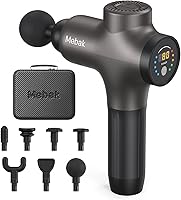
The attachment is the part that meets your body, so its shape affects the contact area and feel. A head meant for broad contact may feel different from a smaller, pointed shape.
Attachments do not change the basic motor action. They change the shape of the surface moving against you.
Choose an attachment that suits the muscle area and follow the device instructions for use; don’t press a narrow head into a small spot just to make the sensation stronger.
The Theragun Prime includes a Dampener for sensitive areas and a Standard Ball for all-over use, according to Therabody’s product details.
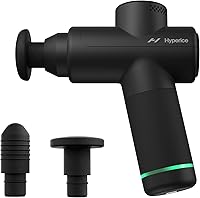
The Hypervolt 2 Pro comes with five heads: fork, ball, cushion, flat, and bullet.
For help matching shapes to muscle areas, read the massage gun attachments guide.
Does a massage gun use percussion or vibration?
Massage guns use repeated percussive movement, though that movement can also create vibration you feel. Percussion describes the head’s repeated contact, while vibration describes a shaking sensation.
The terms can overlap in casual product descriptions. For the basic mechanical picture, focus on the moving head: it repeatedly travels toward and away from the body.
Devices that mainly vibrate without the same back-and-forth stroke may feel different in use. Our comparison of massage guns and vibration massagers explains that distinction.
How should you use the movement safely?
Use a gentle setting and let the head glide over a muscle without forcing it into your body. Stop if you feel pain, tingling, numbness, or unusual discomfort.
Avoid using percussion on bones, joints, the front of the neck, or other sensitive areas. Don’t hold the device in one spot for a long time or use it aggressively.
Follow the device instructions, and ask a health professional before use if you have a medical condition, recent injury, or concern about whether percussion is suitable for you.
A systematic review of massage guns describes their repeated tip movement and notes that research on effects and use parameters is still limited. Read the review in the National Library of Medicine for a research overview.
For practical habits, see how to use a massage gun.
What should you compare when choosing a massage gun?
Compare speed settings, stroke information, attachment shapes, and the controls you’ll use. Each tells you something different about how the device is designed to work.
A speed dial or button changes the pace of the repeated movement. Head shapes affect contact, while published amplitude describes how far the head travels.
Some devices also describe how their motors respond under pressure, but those claims may use different measures, so check what each brand means.
The Hypervolt 2 Pro has a speed dial and five speed settings. The Theragun Prime has one-button controls, LED indicators, and five massage speeds.
These controls show how each device lets you change the pace; they don’t guarantee a particular result.
Start with the massage gun buying guide if you’re comparing features across models. For the category overview and related topics, visit massage gun basics.
How does a massage gun work, in short?
A massage gun’s motor drives a head through repeated back-and-forth strokes. Speed sets the pace, stroke length describes the travel distance, and the attachment changes the contact shape.
Use the settings gently and choose a head that fits the area you intend to massage.
Frequently asked questions
How does a massage gun work mechanically?
A motor moves an internal mechanism that drives the attachment head back and forth. The head makes repeated contact with the body, creating percussion.
Speed controls change how quickly it moves, while stroke length describes how far the head travels on each cycle.
Does a longer massage gun stroke always feel stronger?
No. Stroke length describes the distance the head travels, but it doesn't tell you how much pressure you'll feel.
Speed, pressure from your hand, the attachment, and the motor's response also affect the sensation.
Start gently and stop if the percussion feels painful.
What does a massage gun head do?
The head is the part that contacts your body, and its shape changes how the contact feels and where it can fit. A rounded head suits broad muscle areas, while smaller or shaped heads can reach tighter spots.
Follow the device instructions and avoid bony or sensitive areas.
Can a massage gun break up knots?
A massage gun delivers repeated pressure to soft tissue, but that does not mean it can safely break up a knot or fix an injury. Use light pressure on muscles, keep the device moving, and stop if you feel sharp pain, numbness, or unusual discomfort.
Ask a clinician about ongoing pain.