Are Massage Guns Worth It for Home Use?
Massage guns can be worth it for home use if you want a cordless tool for brief, targeted muscle massage and will use it often. They may be poor value if you prefer gentler manual pressure, rarely feel muscle tightness, or won't make time to use one.
On this page (8 sections)
- Are massage guns worth it for home use?
- What makes a massage gun useful at home?
- When is buying one a poor fit?
- Which features matter more than a long spec list?
- Which massage gun fits your home routine?
- How can you decide if the cost and space are worthwhile?
- Are massage guns worth it if you already use a foam roller?
- So, are massage guns worth it for you?
Massage guns can be worth it for home use if you want brief, targeted percussion massage and expect to use the device regularly.
The useful question is not whether massage guns are popular, but whether one fits your routine. Think about the areas you want to reach, how much intensity you prefer, and whether a powered tool would make self-massage easier.
Are massage guns worth it for home use?
A massage gun is worth considering when it helps you follow a routine you already want. Its motor moves an attachment rapidly against the body, giving you a focused sensation without needing to roll your weight over a tool.
That can make it convenient for short sessions after activity or a long day. It doesn't guarantee pain relief, improve an injury, or replace care from a health professional.
A massage gun is less useful if you don't like percussion or don't have a clear place for it in your week. A tool that stays in a drawer won't add much value, even if it has many speeds or attachments.
If you're still deciding what the device does, start with what a massage gun is and who it is for. For a closer look at the motion, see how a massage gun works.
What makes a massage gun useful at home?
The best home massage gun is one you can use comfortably, safely, and often enough to justify keeping it. A simple control scheme, a comfortable grip, and attachments suited to your intended areas matter more than a long feature list.
Consider these points before buying:
- Reach: Can you comfortably access the areas you have in mind?
- Pressure: Do you want a gentler feel or a more intense one?
- Noise: Will the motor bother anyone nearby?
- Controls: Can you adjust speed without interrupting a session?
- Storage: Is the device easy to put away and bring out?
- Use: Do you have a routine that makes you likely to use it?
Our massage gun buying guide goes through the features to check first. An attachments guide can help you understand why a set of heads may suit some areas better than others.
When is buying one a poor fit?
Skip a massage gun if percussion doesn't feel comfortable or you have no likely use for it. It can also be a poor fit if you want a tool that covers a broad surface in a single pass.
A foam roller may suit you better when you prefer slower pressure across larger areas. Compare the tradeoffs in our massage gun vs foam roller guide.
Don't use a massage gun to push through sharp or worsening pain. Avoid bony areas and the front of the neck, follow the instructions for your model, and ask a health professional about use if you have a medical condition or ongoing symptoms.
Are mini massage guns worth it for home use?
A mini can be worth it if compact size makes you more likely to use and store it. A smaller device may suit a desk drawer or travel bag, while a full-size model may be easier to choose if your priority is grip and reach.
Compare size, weight, control layout, and the areas you expect to massage. Our guide to whether mini massage guns are worth it covers that tradeoff in more detail.
Which features matter more than a long spec list?
Choose features that solve a real problem in your routine. Extra speeds, heads, or temperature settings are useful only if they make the device easier or more comfortable for you to use.
Do you need several speeds?
Several speeds give you options for changing the feel, but more settings don't make a device a better fit by themselves. If you want simple controls and a gentler massage, look for an uncomplicated model with a lower-intensity option.
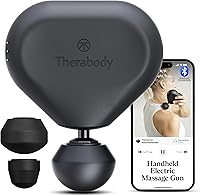
The Therabody Theragun Relief has 3 speeds and one-button control. Therabody describes it as its gentlest level of percussive massage and includes a dampener, standard ball, and thumb attachment.
Its triangle grip is designed to help you reach areas without another person's help. Consider your own mobility and grip before choosing any handheld device.
Do heat and cold make a massage gun more worthwhile?
Temperature controls may suit you if you specifically want warmth or cooling as part of your routine. They add another function to learn, so consider whether you would use those settings on their own or alongside percussion.
The RENPHO Active Thermacool 2 has 4 heat levels up to 113°F (45°C) and 4 cold levels down to 46°F (8°C). RENPHO says you can use heat or cold without percussion, and the device has a display for speed, battery status, and temperature settings.
RENPHO says the device shuts off after 10 minutes and advises against continuous use for more than 30 minutes per session. Follow the instructions for the model you buy, since these limits are specific to this device.
Does a larger set of attachments help?
More attachments help when you know which shapes you want to use and can select them comfortably. A large set can be unnecessary if one or two heads already suit your routine.
The TOLOCO Massage Gun includes 10 massage heads, multiple speed levels, and an LED touch screen. TOLOCO describes its motor as quiet, with a stated operating range of 40 to 50 dB.
Choose an attachment based on the instructions and the area you're addressing. Don't press a pointed head hard into a tender spot or use a massage gun over bones.
Which massage gun fits your home routine?
Choose the model whose controls, feel, and added features match the way you plan to use it. These options represent different priorities rather than a single best choice for every home.
- Therabody Theragun Relief: A gentler option with 3 speeds, one-button control, and 3 attachments.
- RENPHO Active Thermacool 2: A temperature-focused option with independent heat and cold settings.
- TOLOCO Massage Gun: An option with 10 attachments, multiple speeds, and a display.
If portability is the priority, compare size and handling with our best mini massage guns guide. For more options across types, see best massage guns by strength, size, and noise.
How can you decide if the cost and space are worthwhile?
Try the routine before you buy: name the area, the time, and the situation in which you'd use the device. If you can't picture a realistic use, a massage gun may not earn its place at home.
Think about the full routine, not just the device. You'll need to choose an attachment, find a comfortable grip, and follow the instructions; if those steps sound like a chore, a simpler option may fit better.
What should you compare before buying?
Compare handling and controls first, then weigh extra features against your intended use. A comfortable grip and settings you understand can matter more than a higher number of attachments.
Use this quick check:
- Identify the body areas you want to reach.
- Decide whether you prefer gentle, adjustable, or intense percussion.
- Check whether you want heat, cold, or extra attachments.
- Consider noise, weight, reach, and storage.
- Read the instructions for safe use before starting.
Don't assume a more powerful motor is automatically better for you. Pressure should feel comfortable, and more intensity is not a reason to press harder or stay on one spot longer.
Are massage guns worth it if you already use a foam roller?
Keep both only if they serve different routines you actually use. A massage gun offers focused powered percussion, while a foam roller provides broader contact as you move over it.
If you like the feel of a roller and use it regularly, you may not need another tool. If you prefer targeted contact and can reach the areas you want, a massage gun may add a useful option.
For occasional muscle tightness, try the approach you already have before buying something new. If discomfort persists or affects daily life, ask a health professional for advice rather than relying on a massage tool.
So, are massage guns worth it for you?
Massage guns can be worth it for home use when you want targeted percussion, can handle the device comfortably, and expect to use it regularly. They are easier to justify when their size, grip, controls, or temperature features match a specific routine.
Choose Therabody for a gentler three-speed setup, RENPHO if you want independent heat and cold controls, or TOLOCO if you want a wider selection of heads. If you are still comparing features, use the massage gun buying guide to make the choice.
Frequently asked questions
Are massage guns worth it for home use?
They can be worth it if you want brief, targeted percussion massage at home and expect to use one regularly. Think about where you would use it, whether you can reach those areas comfortably, and whether you prefer percussion to a foam roller or manual massage.
Skip it if it would sit unused.
How often should you use a massage gun?
Follow the instructions for your specific device and keep sessions brief. RENPHO says its Active Thermacool 2 shuts off after 10 minutes and should not be used continuously for more than 30 minutes per session; that guidance applies to that model, not every massage gun.
Can a massage gun replace a foam roller?
No single tool suits every routine. A massage gun provides powered percussion at a small contact point, while a foam roller lets you move your body over a wider surface.
Pick the one you can use comfortably and consistently, or compare both in our massage gun vs foam roller guide.
Are massage guns safe for everyone?
No. Avoid using a massage gun over injuries, painful or swollen areas, bones, or the front of the neck, and follow the device instructions.
If you have a health condition, take blood thinners, or have ongoing pain, ask a health professional whether percussion massage is appropriate.